


guide
AI Governance Guide
Learn how to move from AI policy documents to runtime enforcement and audit-ready evidence.
Shield Control
Shield Control is the AI governance software that ties policy, enforcement, and audit evidence together across all Shield surfaces. Set policy once, enforce everywhere, and produce the evidence your auditors and DPO actually need.
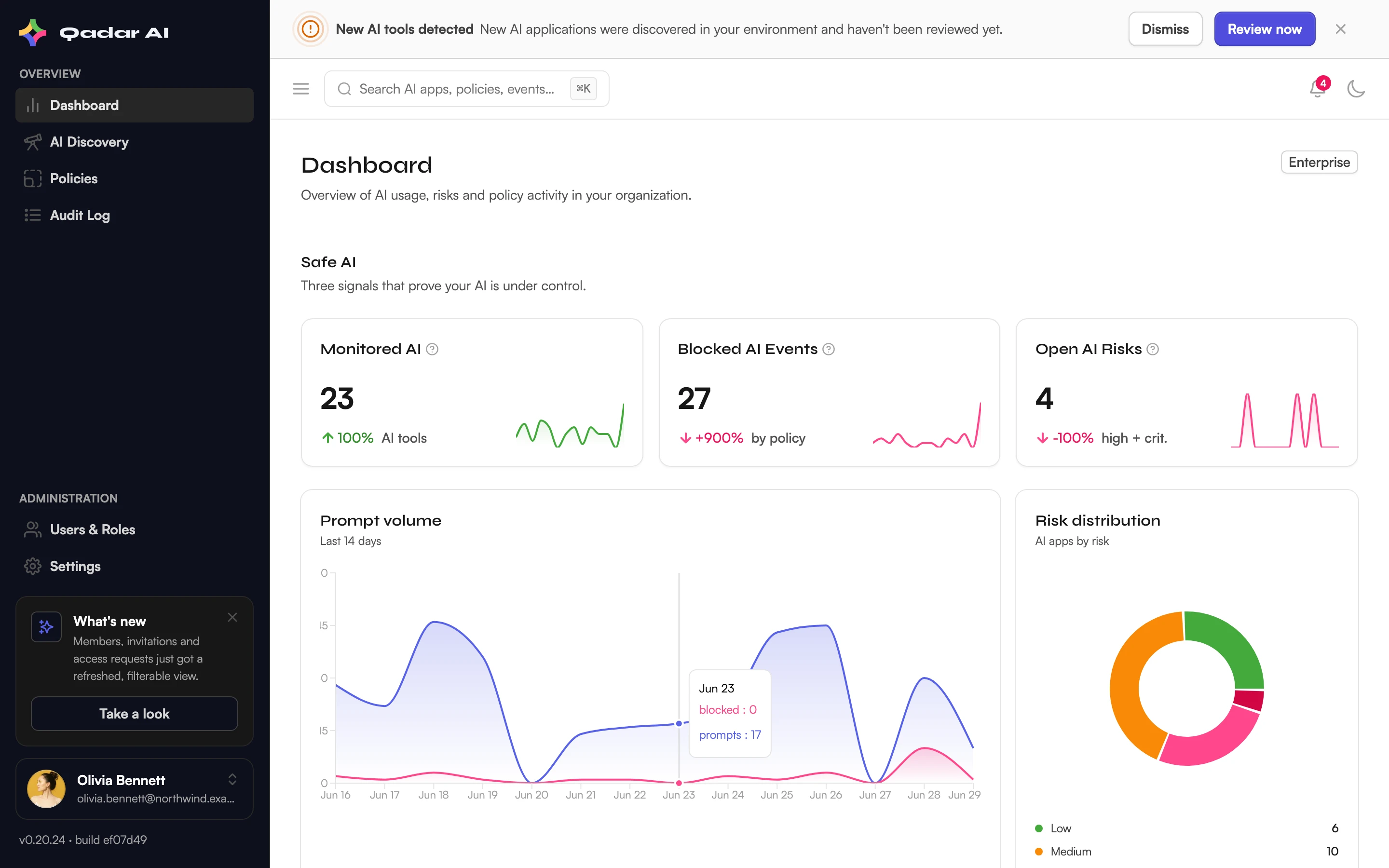
Your team is already using AI. Shield Control turns that from a blind spot into something you can see, control, and prove — in one console, set up in minutes, no security team required.
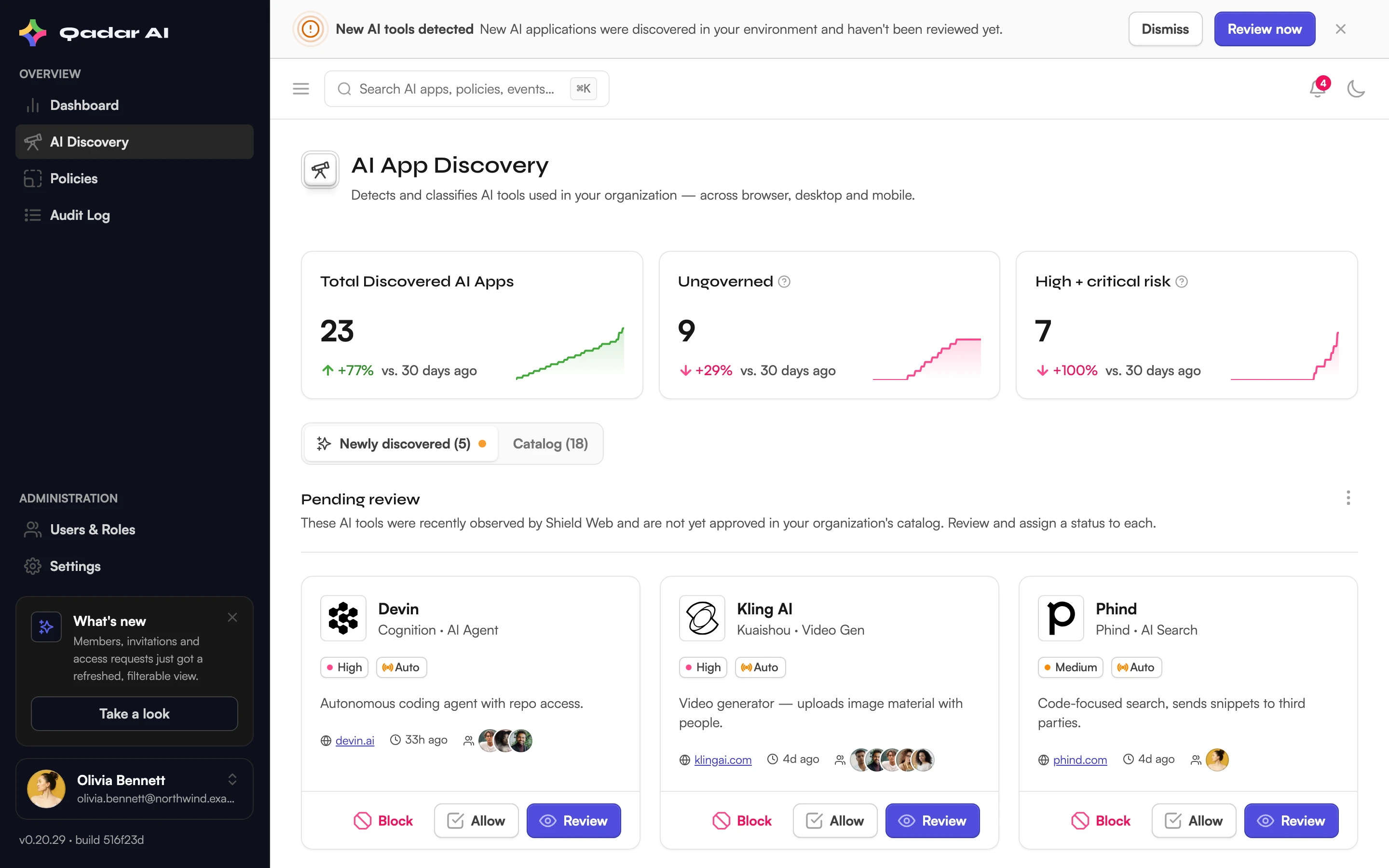
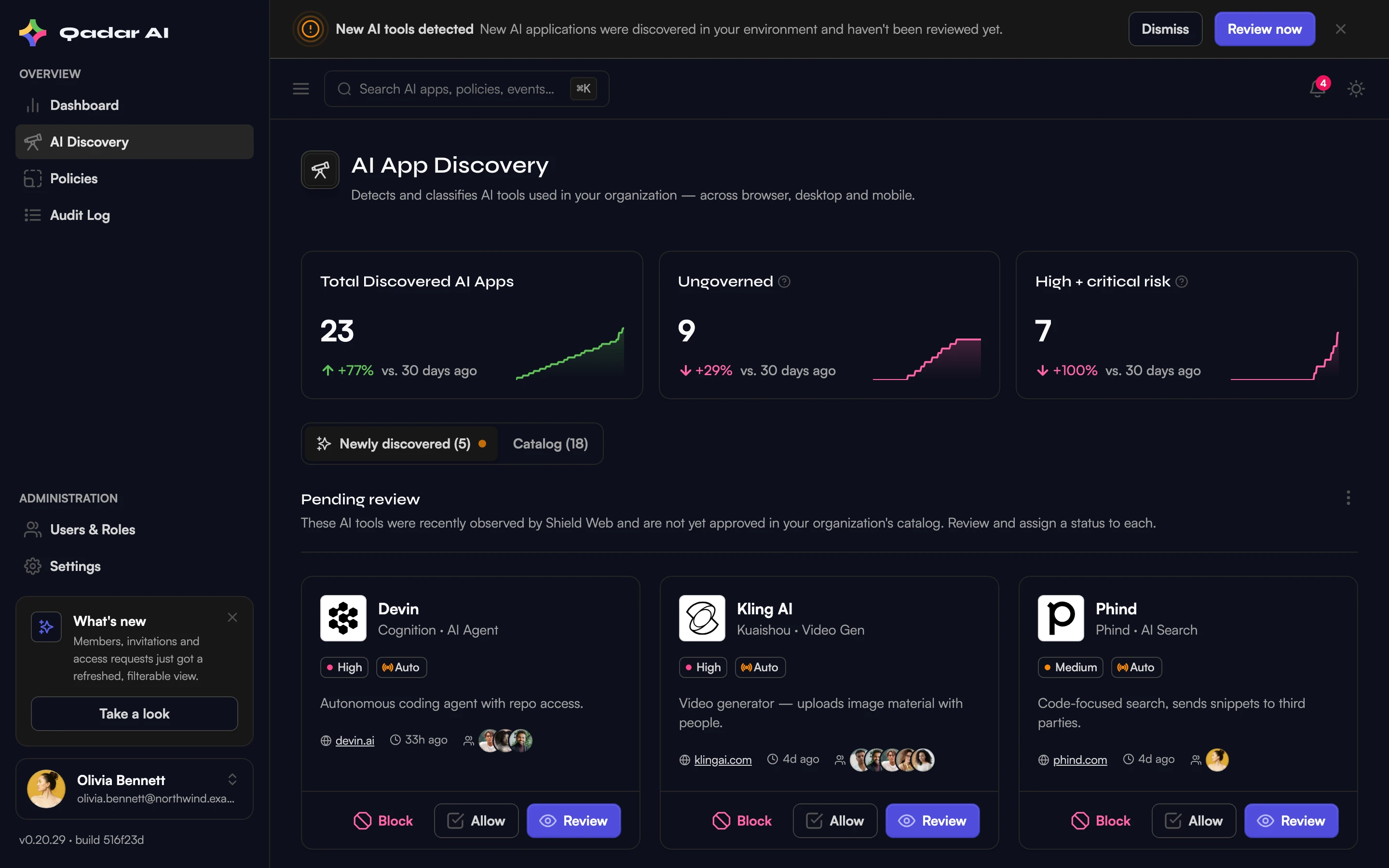
Shadow AI spreads faster than any policy can keep up with. Shield Control recognizes 23 AI tools out of the box — and automatically discovers every one your team opens in the browser, turning the unknown into a managed inventory you can act on.
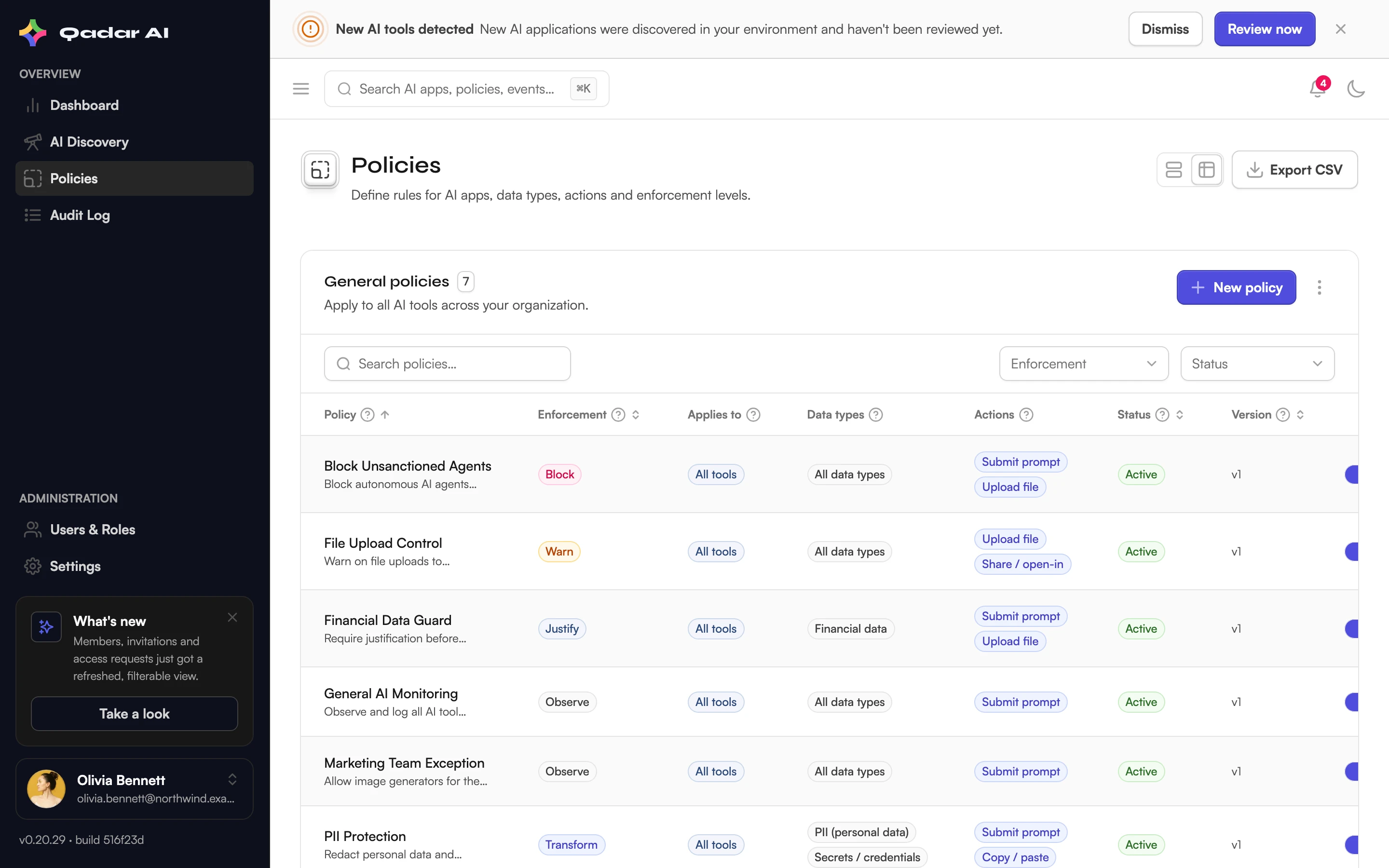
Block everything and you break your team; allow everything and you risk your data. Shield Control enforces your rules at runtime, right in the browser — stopping sensitive data before it ever leaves, while everyday work keeps flowing.
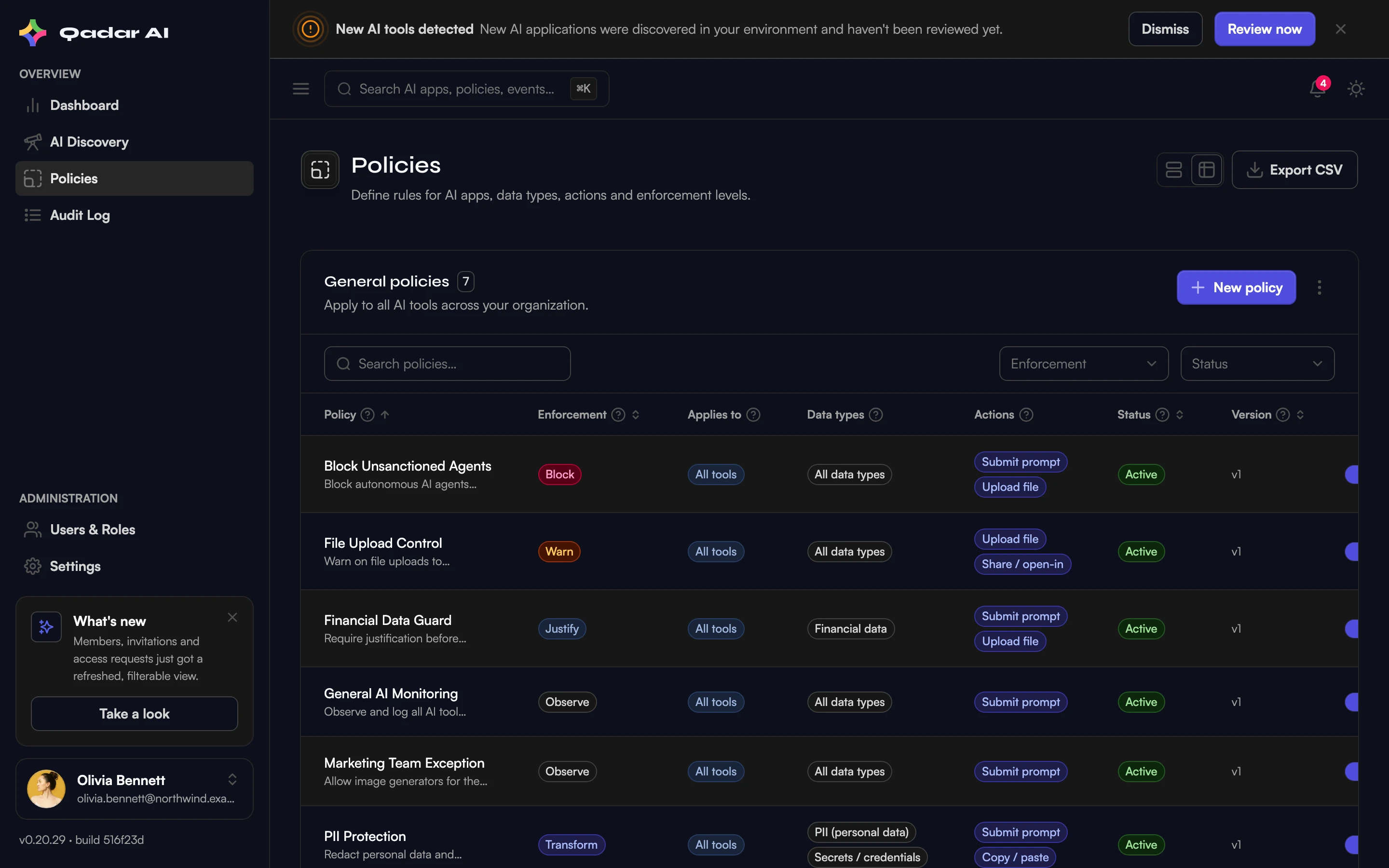
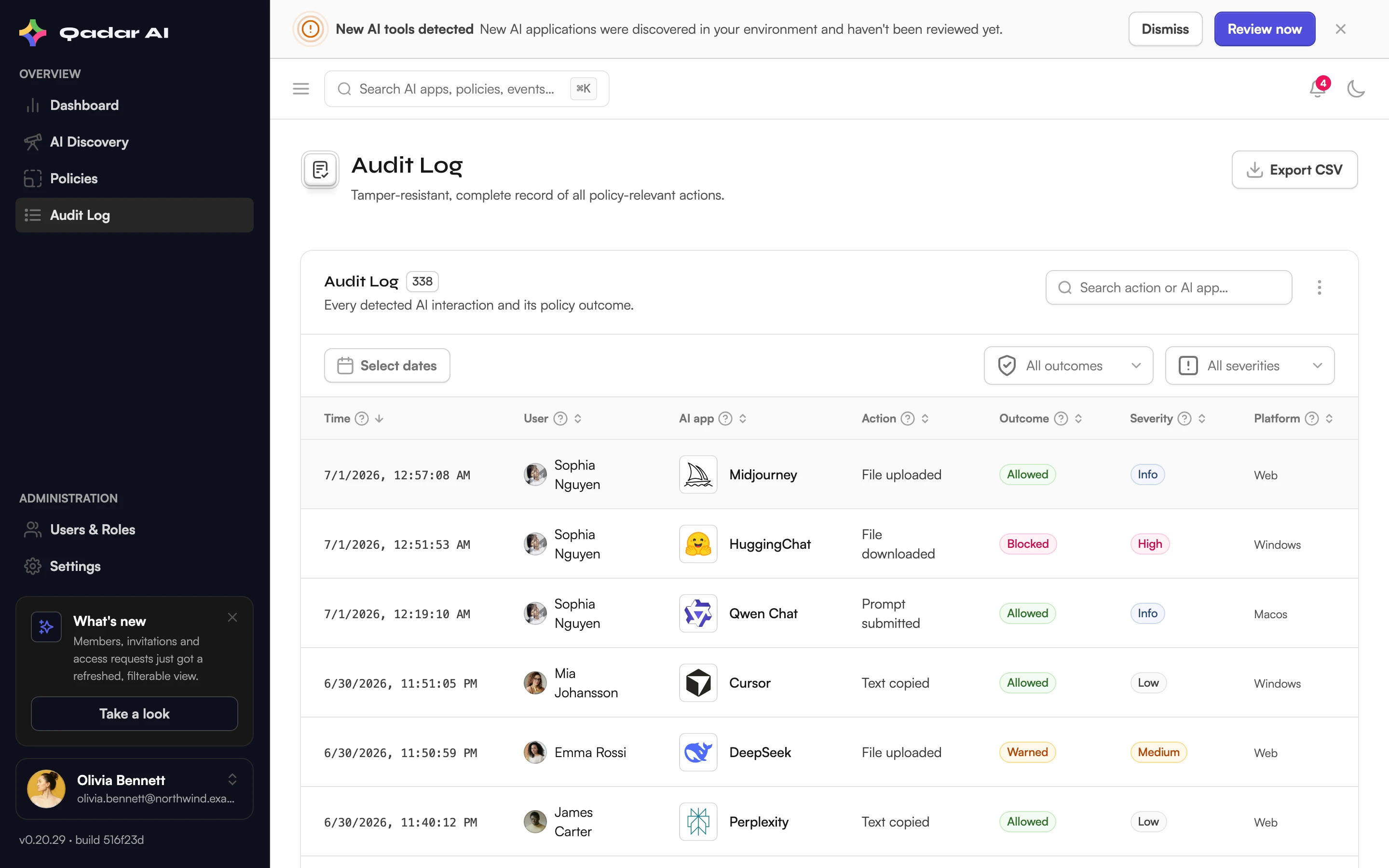
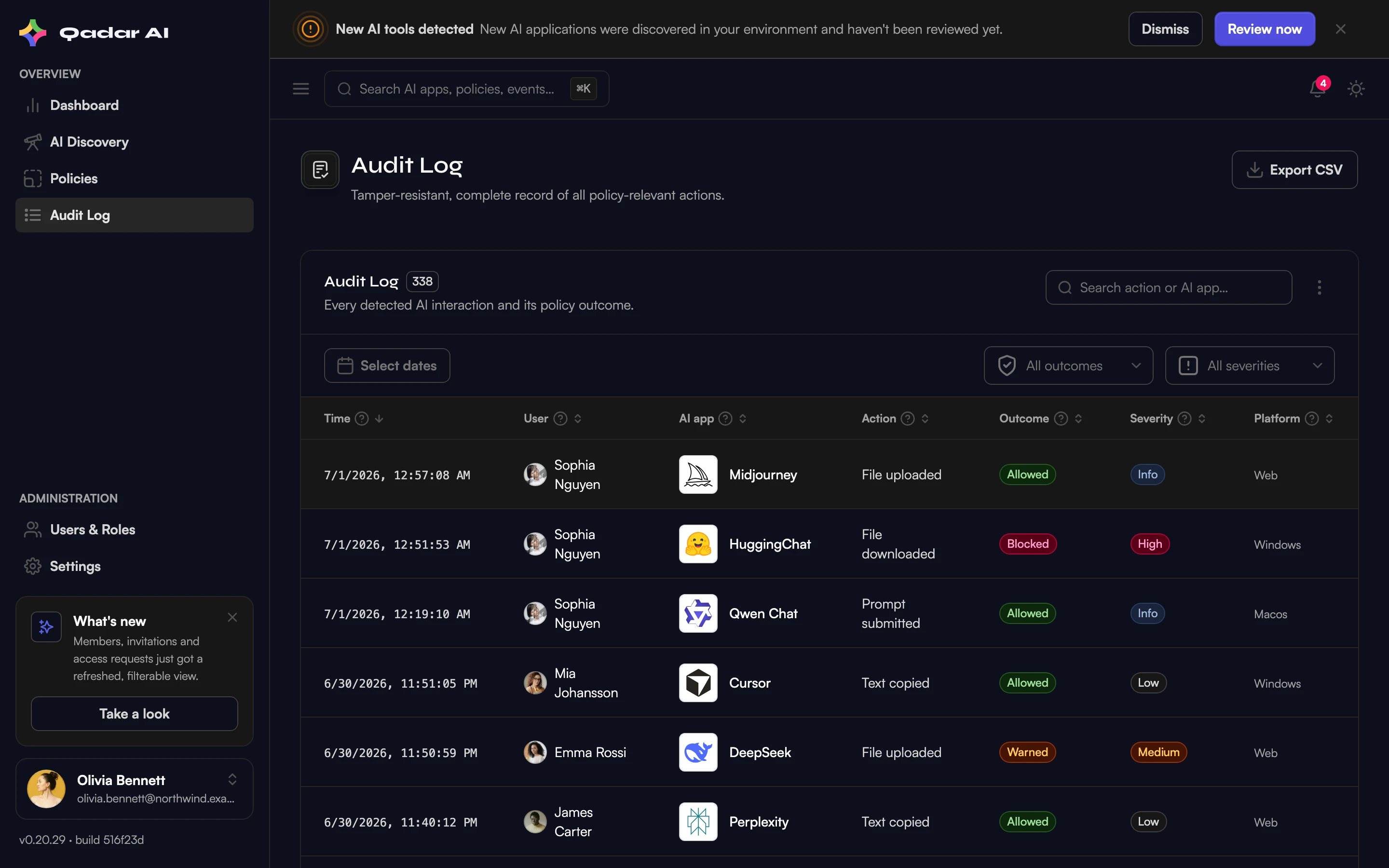
When a customer, auditor or your DPO asks what AI did with your data, "we think it's fine" isn't an answer. Shield Control records every enforced action as audit-ready evidence — capturing the type of data involved, never the content itself.
The challenge
A Shield-Web-style walkthrough that shows the challenge first, then the control path Qadar AI applies in production.
Your DLP catches files and URLs. It does not see what goes into an AI prompt or what comes back out. When your DPO, auditor, or cyber insurer asks for evidence of AI governance, you have event logs at best — not structured policy outcomes.
Signal detected
No audit trail. DLP doesn't cover prompts
Risk context
Your DLP catches files and URLs. It does not see what goes into an AI prompt or what comes back out. When your DPO, auditor, or cyber insurer asks for evidence of AI governance, you have event logs at best — not structured policy outcomes.
Shield Control logs every AI policy decision with structured metadata, classification outcomes, and approval records. Redacted-body retention means you keep evidence without storing raw prompts. Export to your SIEM, produce DPO-ready reports, and maintain an audit trail that holds under review.
Policy decision
Full request log, redacted-body retention, DPO-ready reports
Governed action
Shield Control logs every AI policy decision with structured metadata, classification outcomes, and approval records. Redacted-body retention means you keep evidence without storing raw prompts. Export to your SIEM, produce DPO-ready reports, and maintain an audit trail that holds under review.
Capabilities
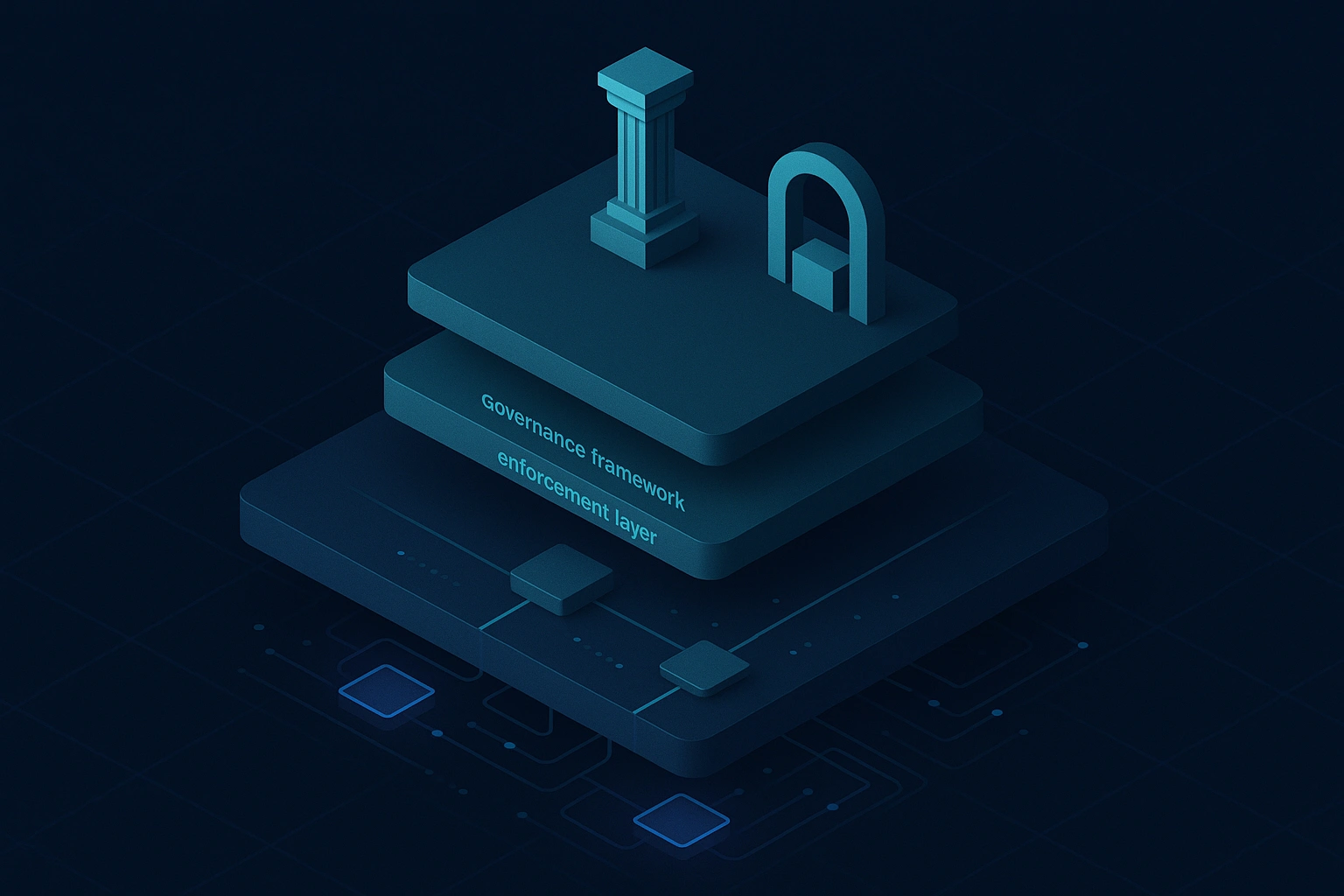
Central policy management with version history, staged rollout, and approval gates. Set policy once and enforce across browser, desktop, mobile, and gateway surfaces.
Audit records capture policy outcomes and redacted metadata — not raw prompt content. Retention windows are configurable per tenant and aligned to your data protection requirements.
Human-in-the-loop approval workflows for high-risk actions. Designated approvers review requests before they reach the model, with full decision logging.
Every AI interaction produces a structured audit entry with policy outcome, classification decision, timestamp, and user context. Evidence is ready for DPO review, external audit, and compliance reporting.
Processing and audit storage can be scoped to EU-region infrastructure. No cross-border routing without explicit policy configuration.
Shield Control is built with SOC 2 control alignment in mind. Tenant isolation, access logging, and encryption controls are designed to support your compliance posture.
FAQ
Questions teams ask about Shield Control
FAQ
No. Shield Control logs policy outcomes, classification decisions, and redacted metadata. Raw prompt content is not stored by default. Customers with forensic log requirements can enable controlled retention under a defined policy.
Yes. Shield Control supports audit event export via webhook and S3 integration. Events can be routed to Splunk, Sentinel, Elastic, and other SIEM platforms.
Every policy change is versioned and logged. You can review policy history, compare versions, and roll back changes. Staged rollout controls let you test policy changes before promoting to production.
Access is role-based and tenant-scoped. Administrators, policy managers, and auditors each have defined permission levels. All access events are logged for accountability.
Yes. Tenant data and controls are logically isolated at architecture level. Each tenant operates with independent policy configuration, audit storage, and access controls.
guide
Learn how to move from AI policy documents to runtime enforcement and audit-ready evidence.
glossary
Clarify governance terms such as policy enforcement, audit trails, approvals, and data residency.
product
See how browser prompts are inspected and governed before data reaches an AI provider.

persona
Explore the AI governance controls security leaders need for DLP gaps, audit, and insurer review.
A product and security specialist will reply within one business day